How to Host a Poker Night People Want to Come Back To
Six decisions made before anyone arrives: format, stakes, chips, blinds, house rules, and food. Defaults included, disputes prevented.
Aug 23, 2026 · 7 min read · PokerInk Team
A good poker night needs six decisions made before anyone arrives: the format, the stakes, the chips, the blind structure, the house rules, and the food. Hosts who wing those six spend the evening adjudicating instead of playing. This guide makes each decision for you, with the defaults we would pick, and you can override any of them once the game finds its rhythm.
Decision 1: tournament or cash game
A tournament means everyone pays once, chips have no cash value, and play continues until one player has them all. A cash game means chips are money, players buy in and cash out freely, and the night ends when people go home.
For a first poker night, run a tournament. The buy-in is capped, so nobody can lose more than they agreed to at the door. It has a natural story arc, with a start, eliminations, and a winner. And it ends at a predictable time, which matters on a work night. Cash games are better for a rotating regular crew that wants to come and go, but they need more chips, more banking discipline, and more trust.
Decision 2: stakes
Pick a buy-in that the most cautious person at the table will not miss. For most friend groups that is $20 to $50 for a tournament. The money is not the point of a home game; it exists so the decisions feel real. A common structure that keeps everyone happy: 70/30 payouts for 5 or 6 players, 50/30/20 for 7 or more, so a full table is not playing three hours for two paid spots. Agree on payouts before the first hand, out loud. Money disputes end more home games than bad cards do, and most trace back to a rule nobody stated in advance.
Two more money rules that belong at the door. The game is no-limit hold'em unless your group already plays a mix; a first night is not the time for dealer's choice. And the host never takes a cut of pots or charges to play: a raked home game is illegal in most places, and it changes what the night is everywhere.
Decision 3: chips
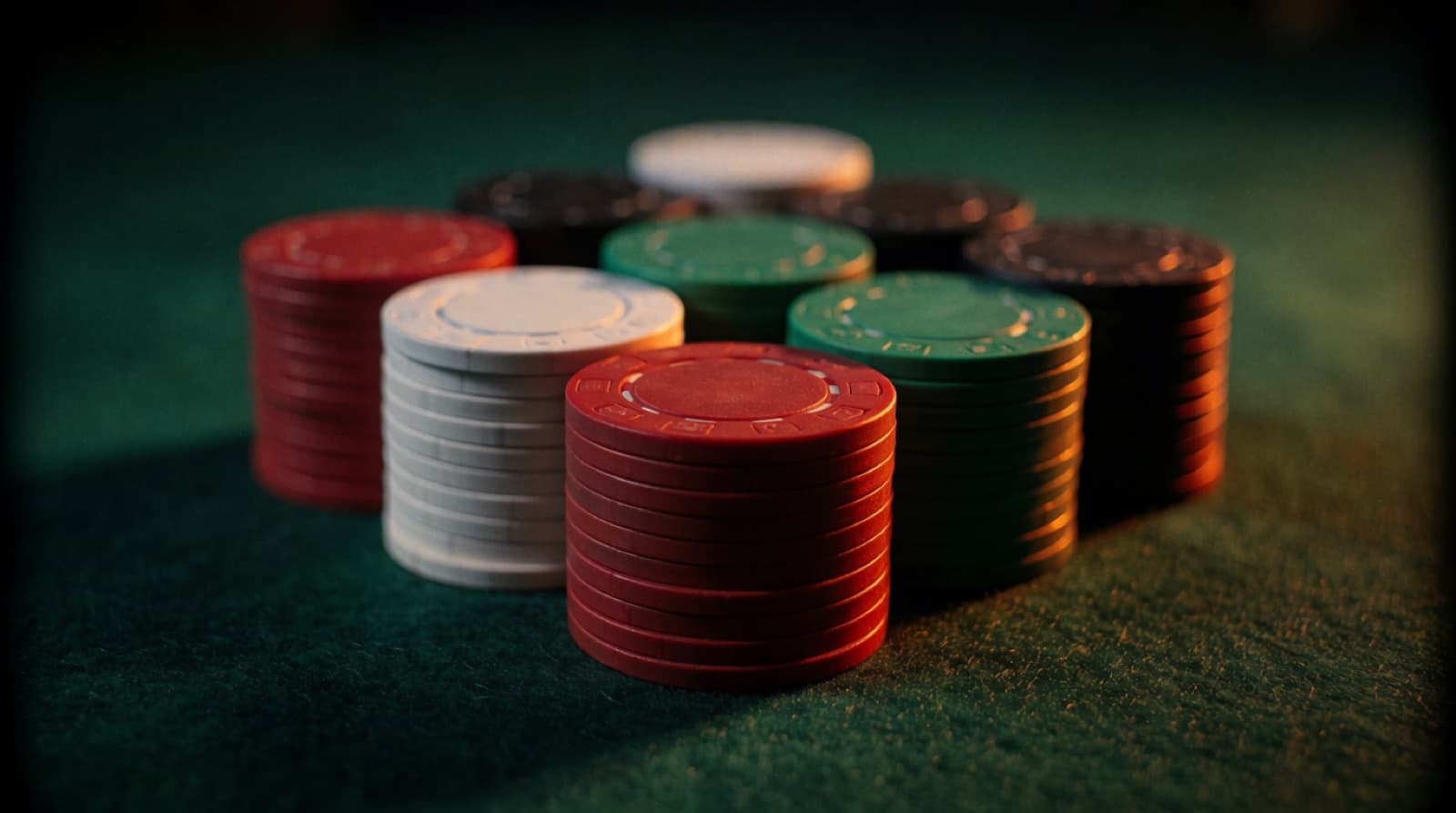
You need four colors in sensible steps, and more of the two smallest values than feels necessary. The standard tournament stack is T5,000 per player: 8x T25, 8x T100, 4x T500, 2x T1000. That is 100 big blinds when blinds start at 25/50, which is enough to play real poker rather than bingo. Our chip values guide covers the full setup, including casino color conventions and what to do with a case that has the wrong mix.
Decision 4: the blind structure
This is the decision that most often ruins a first poker night, and it is the easiest to get right. Blinds that rise too fast turn the evening into a shove-fest by 9:30. Blinds that rise too slowly leave four people still playing at 1am on a Tuesday.
The structure comes down to three numbers: a 100 big blind starting stack, levels of 15 to 20 minutes, and blinds that rise 30 to 50% per level. Our blind structure guide has two ready schedules: a 2-hour turbo with 15-minute levels for 6 to 9 players, and a 4-hour standard with 20-minute levels for a weekend game. Print the schedule or put it on a tablet where everyone can see it. A visible clock ends the "wait, what are the blinds" interruptions on its own.
Decision 5: house rules, stated before the first hand
Six rules prevent most of the arguments a home game produces:
- Declare raises before moving chips. A bet made in two motions without declaration is just the first motion.
- Cards speak. The best hand at showdown wins even if its owner misread it.
- One deck in play, one being shuffled. The next dealer shuffles while the hand plays out, which is the cheapest way to keep the game from stalling.
- Set a rebuy policy now, and say it at the door. Tournaments: rebuys allowed for the first hour, then done. This softens early bust-outs without making the night endless. Buy-in plus the rebuy window is the real cap on the night, so that is the number to state up front.
- Race off the small chips. When the big blind reaches 200, the T25s come off the table: announce it a level ahead, exchange stacks up, and give any odd chip to the player closest to the button. Skipping this is how the table drowns in chips nobody can make change with.
- Set an end time for cash games now. "Last orbit at midnight" announced at 8pm hurts nobody; the same words at 11:55 start an argument.
Also settle three small things before hand one: who deals (rotate with the button unless someone loves the job), what a misdeal is (redeal it, do not litigate it), and that a card off the table is dead. The host plays the role of the floor. Rule on disputes quickly, cheerfully, and against your own interest when it is close. And decide at the start how the night can end: play to a winner, or let the last two or three chop by chip count when the stated end time arrives. A Tuesday game that refuses to chop at midnight does not become a monthly game.
Decision 6: food
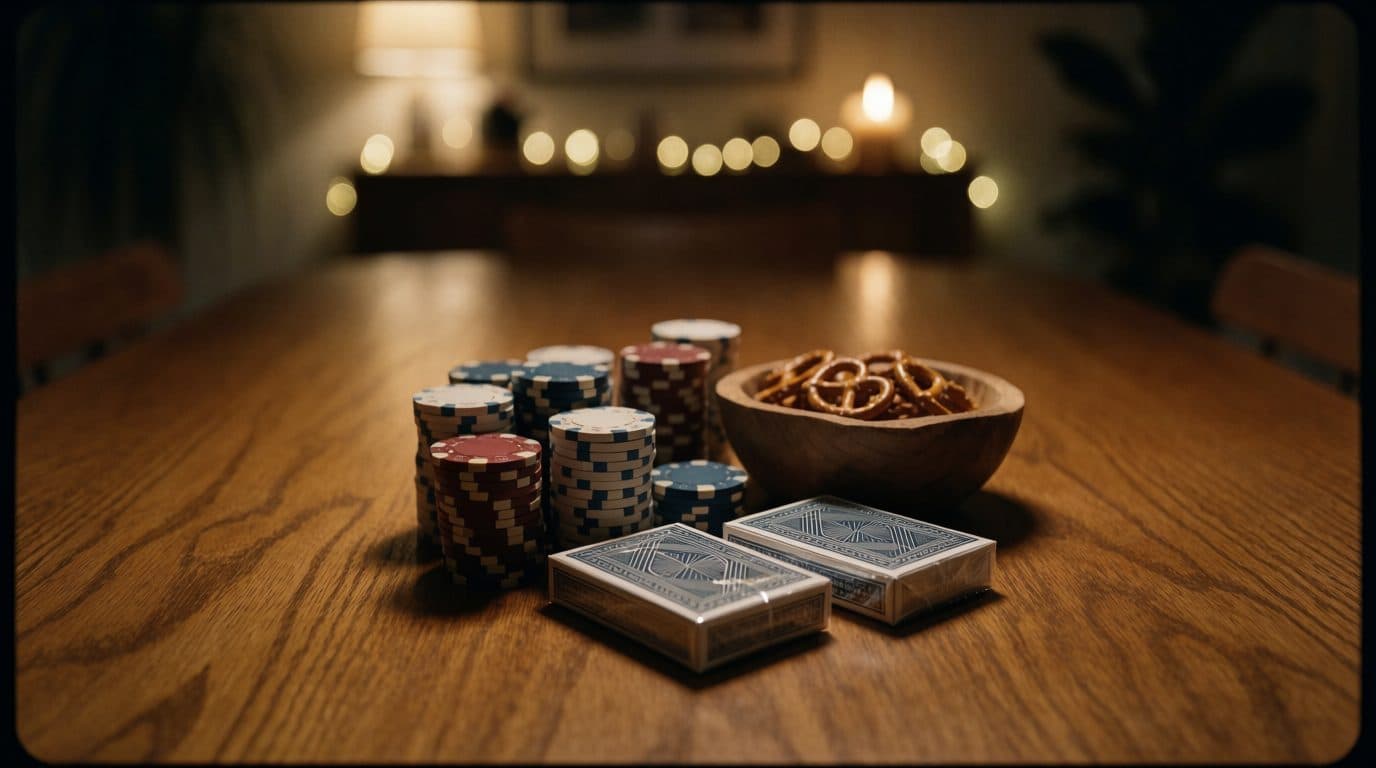
The rule for poker food is one hand, no grease. Chips (the potato kind), pretzels, nuts, cut vegetables, popcorn, and anything skewered all pass. Wings, pizza eaten at the table, and powdered anything all fail: card players with slick fingers mark every card they touch. The clean move is pizza before cards, snacks during, and the felt stays playable. Nothing wet on the felt: cup holders if your table has them, coasters and a side table if it is the kitchen table.
Keeping the game alive
The difference between one poker night and a monthly game is mostly logistics. Lock a recurring date, because "we should do this again" without a date means never. Keep a group chat for confirmations, and overbook by one, since somebody always cancels. Keep the stakes stable; ratcheting them up quietly filters out the people who made the game fun.
And settle arguments about hands the way card players should: with the actual numbers. When a hand from the night turns into a debate, we pull up the odds calculator, set the two hands, and let the exact equity end the discussion. Half the fun of a home game is discovering the flush draw everyone swore was a big favorite was closer to a coin flip all along.
Log the hands worth arguing about
PokerInk is free to start on iPhone, Android, and the web. See pricing.


Frequently asked questions
How many poker chips do I need for a home game?
The standard tournament stack is T5,000 per player from four colors: 8x T25, 8x T100, 4x T500, 2x T1000, which plays as 100 big blinds at 25/50 blinds. Eight stacks need 64/64/32/16 of the four values, so count your case's actual mix; a 300-chip case has the count but often the wrong colors.
Should a first home poker night be a tournament or a cash game?
A tournament. Losses are capped at the buy-in, the night has a defined end, and nobody needs to handle money mid-game. Move to cash games once the group is regular and trusts each other.
How long should a home poker tournament last?
Pick it in advance with the blind schedule: 15-minute levels are built to finish 6 to 9 players in about 2 hours, though rebuys, breaks, and table talk stretch that toward 3; 20-minute levels run closer to 4. The structure decides the length, so choose the structure that fits the night, and set a hard stop with a chop rule so the night ends when you said it would.
What food works for poker night?
Anything eaten with one hand that leaves no residue: pretzels, nuts, popcorn, cut vegetables, skewers. Serve pizza or anything greasy before cards come out. Slick fingers mark cards.
What house rules should a home game set in advance?
Declare raises before moving chips, cards speak at showdown, rebuy policy stated up front, payouts agreed before the first hand, and a fixed end time for cash games. Nearly every home-game dispute traces to one of these being left unstated.